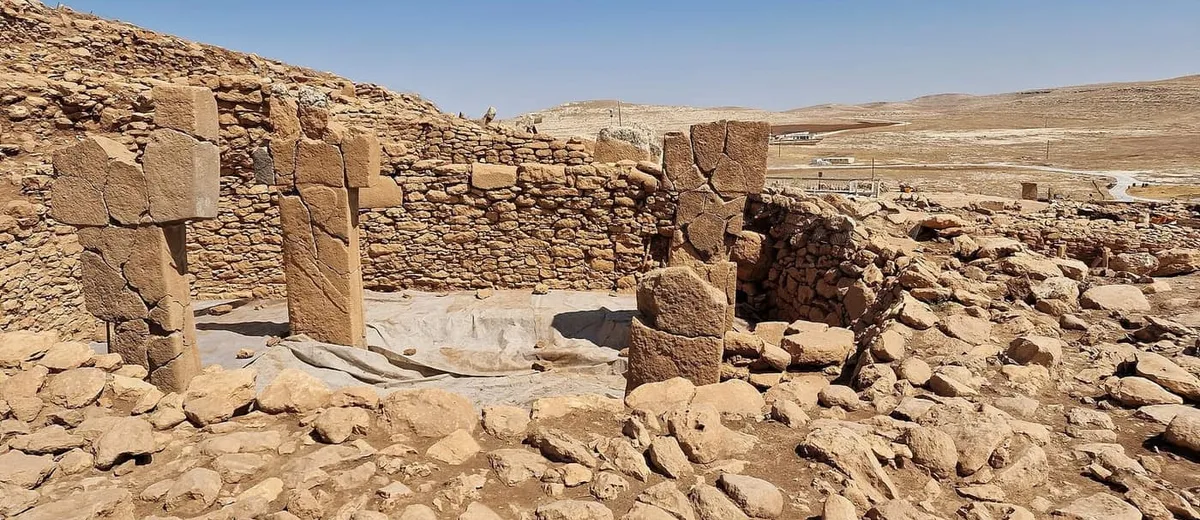
Graham Hancock (Magicians of the Gods, 2015) argues the sites preserve knowledge passed on by survivors of a lost Ice-Age civilisation destroyed in a Younger Dryas cataclysm.
Martin Sweatman & Dimitrios Tsikritsis (2017) read Pillar 43 (the "Vulture Stone") as a date-stamp recording a comet impact around 10,950 BCE.
The mainstream view
The excavators (German Archaeological Institute) interpret the enclosures as the work of Pre-Pottery Neolithic foragers; no evidence of metal tools, writing or agriculture-based urbanism has been found.
Archaeologists have criticised the Vulture Stone astronomy reading as statistically weak and inconsistent with the site’s stratigraphy.
We present both views respectfully and link to the original work so you can judge for yourself.
Genomes from early farming villages including Çatalhöyük shed light on household and kinship structure. The research highlights women’s lines in some communities.
British author and former Economist correspondent whose books Fingerprints of the Gods, Magicians of the Gods and America Before argue for a lost Ice Age civilisation. He presented Netflix’s Ancient Apocalypse and hosts tours in Egypt, Turkey (Türkiye) and Peru/Bolivia in 2027.
British science and history writer focused on the origins of civilisation in Anatolia, the Younger Dryas and the Cygnus constellation. He co-leads Megalithomania tours to Turkey (Türkiye), Armenia and Egypt.
Geologist at Boston University best known for arguing that weathering of the Great Sphinx enclosure points to a far older origin than Khafre. He also writes on Göbekli Tepe, solar outbursts and the end of the last Ice Age.
Author researching what he calls the lost Ararat civilisation. He tracks recurring symbols and an “ancient code” across Peru, Anatolia, Egypt and Cambodia, collected in his Ancient Code Database.